
Independent testing begins after Peoples Cartage warehouse fire
WTAP
By Gavin Carrig
Jul. 13, 2026
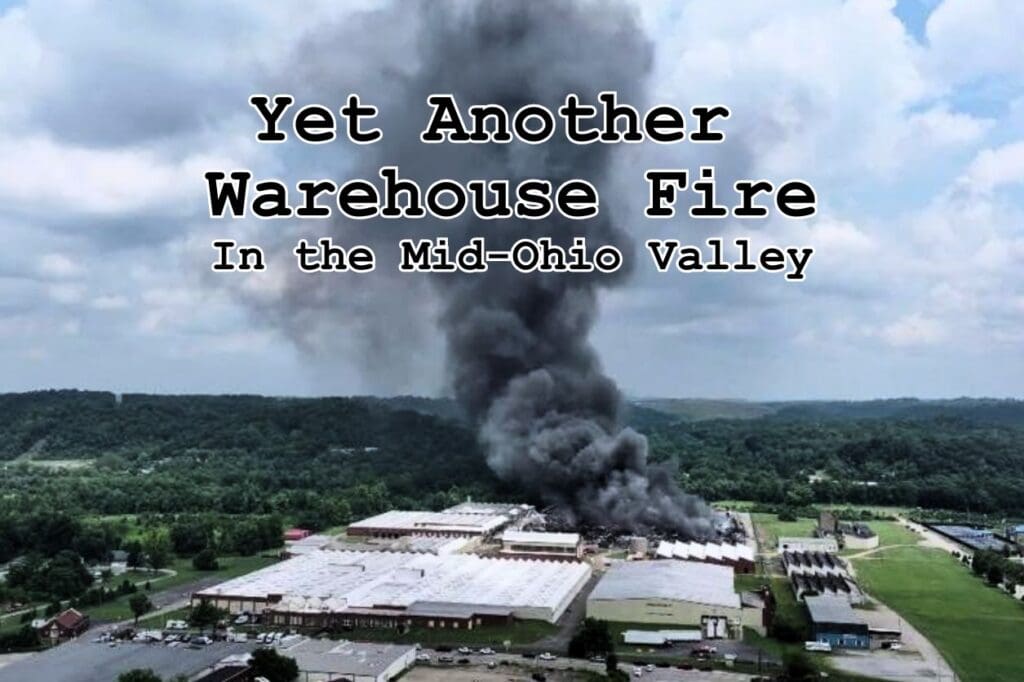
PARKERSBURG, W.Va. (WTAP) – Just over a week after the Peoples Cartage warehouse fire, nearby residents say they’re still left with lingering questions — and limited information about what may have settled in their neighborhoods.
Now, an independent environmental tester is stepping in to help. Scott Smith, founder and president of the nonprofit Blue Shirt Justice League, is in the Mid-Ohio Valley collecting samples and looking for what he calls a chemical “fingerprint” from the fire.
Smith started Blue Shirt Justice League to support communities impacted by chemical disasters, including East Palestine, Ohio, and Conyers, Georgia. He says his work draws on experience from more than 70 environmental contamination incidents, including one that affected him personally in 2006.
In an exclusive interview with WTAP, based on what he has seen so far, Smith says his early findings raise concerns about the reach of the smoke and debris. He believes the smoke plume may have climbed to about 10,000 feet and that fallout could extend much farther than many people expect — potentially up to 35 miles from the fire site.
“When you see these symptoms and these patterns, there’s East Palestine, there’s Conyers, Georgia, Roseland, Louisiana, Moss Landing — there’s commonalities in all these,” Smith said. “Of all these disasters with plumes and fires and explosions, I’ve never seen one 35 miles out where you can literally see the soot and the ash and the after effects. We don’t know how far this plume has gone at this point, and we’re being flooded with calls for testing.”
Smith says he is confident soot and ash reached at least 35 miles, but he cautions it is still too early to know the full distance the plume traveled until more testing is completed.
This trip marks Smith’s first round of sampling in the area, but he says it will not be the last.
“It’s about the fingerprint,” Smith said. “My focus in this initial trip was a fingerprint. Just like any other crime scene, we want a fingerprint in the mixture of chemicals. I have an expression: you can’t find what you don’t look for.”
Smith says he is specifically testing for products of incomplete combustion — compounds that can be released when materials burn without fully breaking down. He says that matters here because the facility involves plastics recycling and other materials. Smith says when plastics containing chlorine — including polyvinyl chloride (PVC) — burn, the process can produce compounds such as dioxins, semi-volatile organic compounds and polycyclic aromatic hydrocarbons.
“These mixtures have now bombarded the community,” Smith said.
Smith says results from this initial round of testing are expected in three to four weeks. He also plans to return for a second trip to collect additional samples.
He is working with the West Virginia Rivers Coalition to gather as much information as possible and make it available to the public.

Discover more from MOVCAC.com
Subscribe to get the latest posts sent to your email.
