
Parkersburg City Council increases discussion-only sponsors to 4
News and Sentinel
Evan Bevins
Aug 29, 2025
PARKERSBURG – Items to be placed on the Parkersburg City Council agenda will require four sponsors instead of three after an amended resolution passed Tuesday night.
An attempt to postpone the vote because the resolution was submitted after the deadline in council’s rules failed in a 5-3 vote, with Councilwoman Sharon Kuhl abstaining.
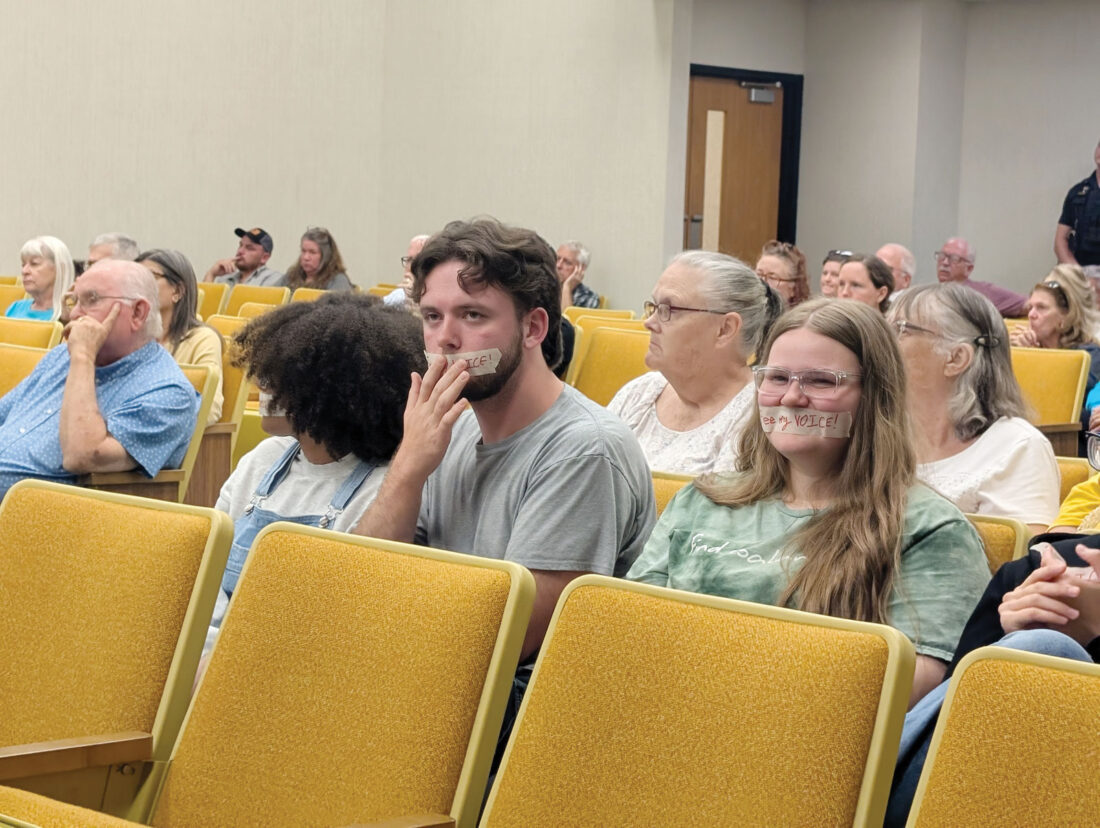
A dozen people in the public forum expressed their opposition to the proposed resolution, which initially would have required five sponsors for discussion-only items, while resolutions and ordinances changing city code would still have only needed three sponsors to appear on the agenda. It was amended to four on a 7-2 vote, and the amended resolution passed 6-3.
Between those votes came Councilwoman Wendy Tuck’s motion to postpone the vote to the next meeting. She asked City Clerk Connie Shaffer if the resolution had been submitted before the deadline of 4:30 p.m. Tuesday, Aug. 19, for the next meeting’s agenda.
“No, ma’am,” Shaffer said.
Tuck next asked City Attorney Blaine Myers if that violated council rules and he acknowledged it was not in compliance with that specific rule. Kuhl said items had been added to the agenda after the deadline in the past.
“If it was wrong, we really need to know this,” Kuhl said.
“Why have rules if we’re not going to follow them?”
Myers said the council president has discretion in many areas and it was ultimately up to council to determine. Kuhl asked what the repercussions would be if the vote proceeded and Myers said he did not know of any, adding no laws or statutes appeared to have been broken.
“Why have rules if we’re not going to follow them?” Tuck said prior to the vote on the motion to postpone.
She was joined by Councilmen Zak Huffman and Chris Rexroad in voting for the postponement.
Every speaker in the public forum stated their opposition to the resolution, including Parkersburg resident Michelle Adkins, who came to the podium with masking tape over her mouth bearing the message “Free my voice.” She conveyed the same statement in sign language with the help of American Sign Language interpreter Ashley Kasara Adams.
Multiple speakers referenced council’s vote earlier this year to change its rules to require public forum speakers to only address items on the agenda.
“Voting on this resolution is, yet again, taking away our voice,” Parkersburg resident Christina Anderson said. “Are you really trying to send us into Communism, taking away our free speech? That’s how it starts.”
When the resolution was taken up, Kuhl made the motion to reduce the number of required sponsors for discussion-only items to four.
“Five was an overkill on sponsorship,” she said after the meeting.
Tuck and Rexroad voted against the amendment.
Kuhl said she supported increasing the number of sponsors because of discussion-only items that had been submitted for that meeting’s agenda, including one to discuss a request for proposals for companies to provide residential trash and recycling service in the city. Like council President Mike Reynolds last week, Kuhl said it was premature to place that on the agenda, since the city is still awaiting bids.
That item was removed from the agenda after a member withdrew his sponsorship.
Parkersburg resident Cathy Whitlatch said in the public forum that council should hear from the public before they look at sanitation proposals, suggesting at least some members’ minds would be made up before the public got to see the specifics of the bids.
Kuhl said after the meeting the public would have multiple opportunities to share their input before any decision on sanitation is made.
Tuck, Huffman and Rexroad voted against the amended ordinance, which passed 6-3.

Free Speech
Brandenburg v. Ohio: Hate Speech Is Free Speech
Is all speech protected under the First Amendment, or is there a line that can’t be crossed? In 1969, the Supreme Court answered this question in the case of Brandenburg v. Ohio. Joseph Fornieri, Professor of Political Science at Rochester Institute of Technology, explains why free speech is the liberty from which all other liberties flow.

Discover more from MOVCAC.com
Subscribe to get the latest posts sent to your email.
