
Ohio seeing decline in public school enrollment
NBC4
Katie Millard
August 22, 2025
COLUMBUS, Ohio (WCMH) — There are fewer public school students heading back to school this year as enrollment continues to decline in Ohio.
According to data from the National Center for Education Statistics, public school enrollment declined 8.7% from 2000 to 2023. Matthew Joseph, senior adviser for education policy at ExcelinEd, warned Ohio could see a further 10% decline over the next 10 years. He encouraged state legislators to start planning.
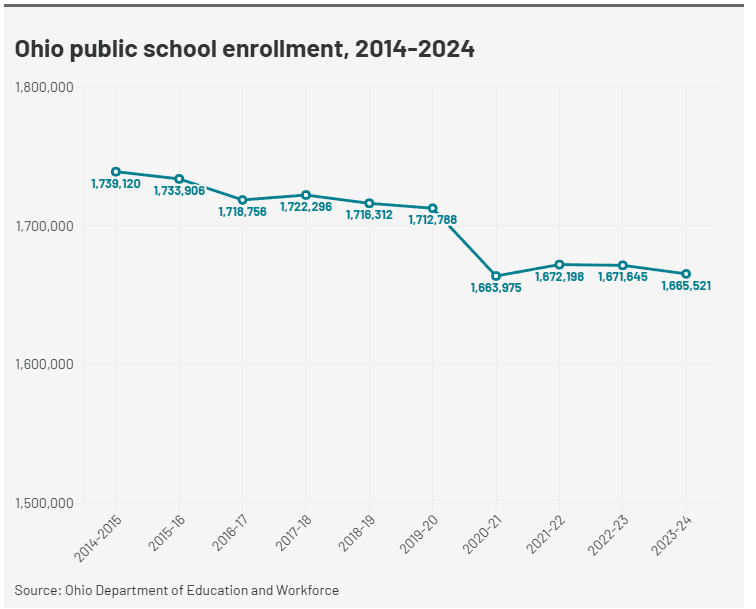
“Without state action, the decline in student enrollment in public schools in Ohio will mean a decline in funding going to those schools, because funding is largely by student per student,” Joseph said. “Without state planning, that drop in funding could raise the risk of lots of schools closing.”
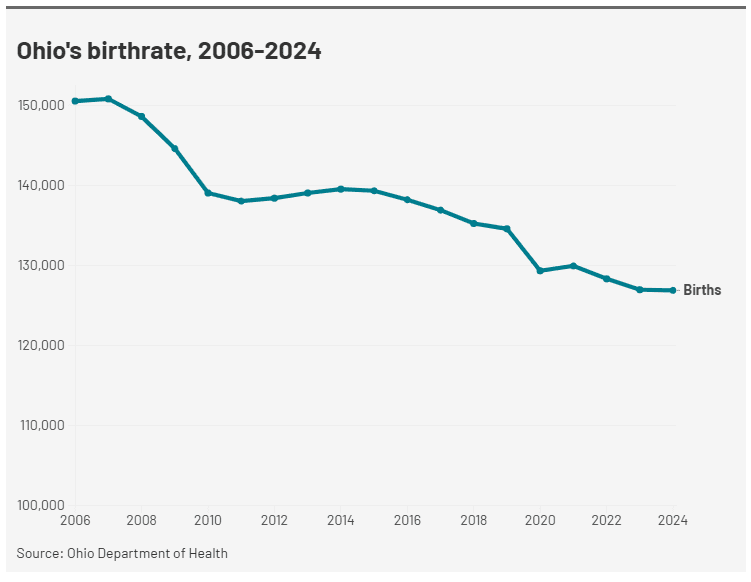
Joseph said he believes declining enrollment stems from lower birth rates. Since 2006, the earliest available state data, Ohio’s birth rate has dropped 15.7%. He said Ohio should be looking at policy changes to help protect schools from closing as enrollment declines.
To protect public schools, Joseph said he sees states fund “ghost students,” a policy change that funds schools based on previous enrollment numbers. Funding “ghosts” is costly for the state, but offers protection for schools as enrollment fluctuates. He said although many states turn to this solution, he does not recommend it as it does not accurately reflect schools’ needs/
Instead, he suggested sharing resources like facilities or cashflow among schools with declining enrollment, including nonpublic schools. Joseph said legislators could step in to ensure districts are distributing assets among other districts.
“Some traditional public school districts are reluctant to share the space,” Joseph said. “They either want to hope for the future that they might get another 500 students, or they don’t want to give the resources to a (school) that they perceive to be a competitor.”
Some public school advocates feel like the state is already ensuring public schools share with nonpublic ones in state education funding. Public school advocates — and a Franklin County judge — say Ohio’s scholarship program unfairly fund a second system of schools with fewer regulations using state dollars, leaving less money for public schools.
Ohio’s scholarship program guarantees any student, regardless of income, at least a partial state-funded scholarship to attend private or charter school. William Phillis, executive director for the Coalition for Adequacy and Equity of School Funding, won a lawsuit challenging Ohio’s voucher programs, which the state is appealing. See previous coverage in the video player above.
“All these giveaways to the private sector have nothing to do with improved educational opportunities, have nothing to do with improving the public good, improving how well students get along together,” Phillis said. “It all has to do with public money being paid to private schools, rather than public money being paid for the education of kids in public schools.”
Joseph is a proponent of school choice and voucher programs but said it’s more likely expanded vouchers will affect public school enrollment in the future. He said most of Ohio’s voucher participants were already in private schools, so they have only marginally contributed to decreasing enrollment rates.
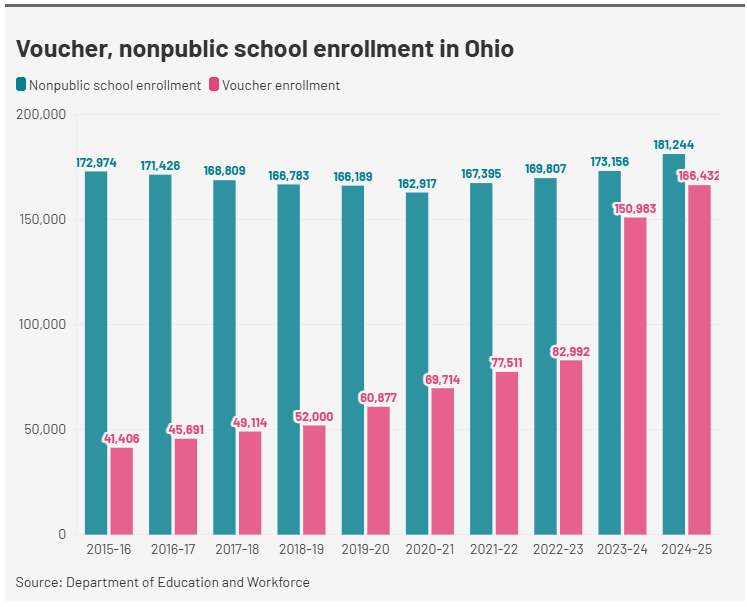
Voucher enrollment nearly doubled after Ohio removed income requirements for participation in 2022, but nonpublic enrollment did not follow suit. Phillis and other anti-voucher advocates often point to this trend as proof universal vouchers are largely benefiting families who can already afford private schools. Voucher program supporters say state money should benefit all students, including those at schools that do not qualify for other public funding.
“What Ohio as a state should be doing is not trying to stop parents from choosing, but to make it so that the resources can ebb and flow without harming the people who are left,” Joseph said.How Ohio’s waterways shaped the state, and the nation
Although Ohio’s public schools overall are enrolling fewer students, several central Ohio school districts are expanding. The Department of Development predicts Ohio as a whole will lose 675,000 residents by 2050, but central Ohio will increase its population by 726,000 people by the same year. Joseph’s recommendation that Ohio schools share facilities is less applicable in central Ohio, where districts are reporting overcrowding.
Joseph examines education policies across the nation, and encouraged Ohio legislators to adapt soon.
“I think that resisting the change, whether it’s because of declining enrollment or because of choice, is kind of like resisting gravity,” Joseph said.

MOVCAC OPINION
School enrollment is DOWN – Property Taxes are UP … This is wrong at every level, stand up for your children and Your Taxes because politicians will NOT.

Discover more from MOVCAC.com
Subscribe to get the latest posts sent to your email.
