
Carbon sequestration bills draw rebuke from activists, oil and gas producers
athensindependent.com
By Dani Kington
June 5, 2025
Twin bills in the Ohio Senate and Ohio House, the former sponsored by Sen. Brian Chavez (R-30), would help transfer authority over underground carbon sequestration to the ODNR.
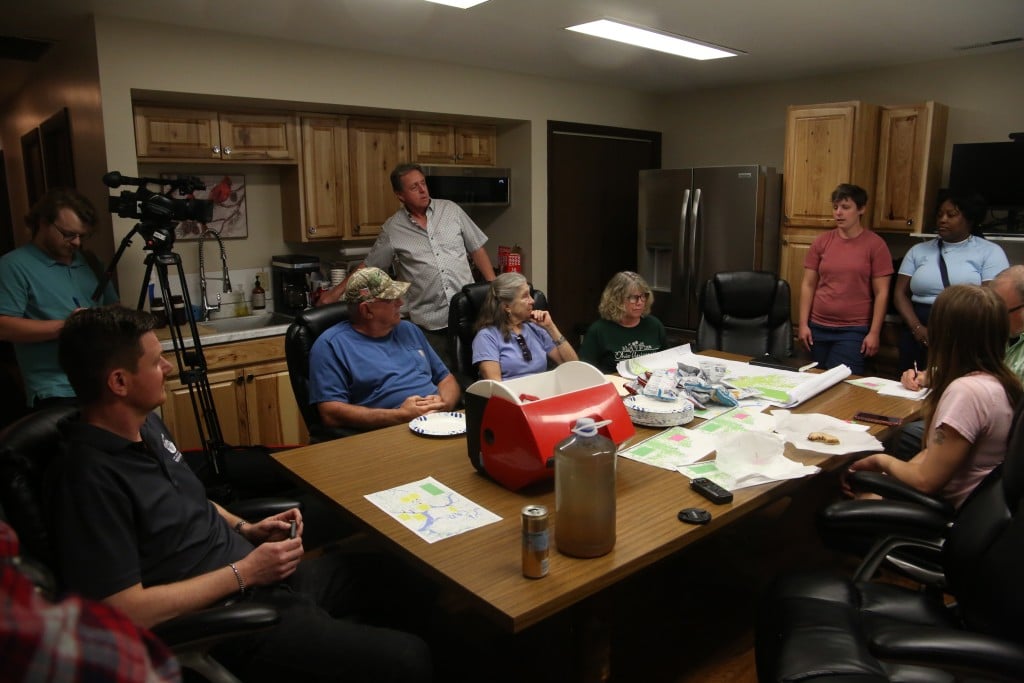
MARIETTA, Ohio — On May 19, a combination of environmental activists, oil and gas producers, township trustees, water association employees and a state representative crowded into the same room at the Warren Water and Sewer Association in Marietta.
The group came together over shared concerns with twin bills moving through the Ohio statehouse, Senate Bill 136 and House Bill 170. Both sponsored by Republicans, the bills would pave the way for Ohio to fast track the development of underground carbon sequestration technology.
Former president Joe Biden’s administration invested heavily in carbon capture technology, with the promise that carbon dioxide could be captured at the point of production and stored underground rather than released into the atmosphere, in order to combat climate change.
The Trump administration has taken aim at carbon capture, recently cutting funding for carbon capture projects.
The idea of carbon capture has been heavily rebuked by many environmentalists.
At a webinar about carbon capture and sequestration hosted by the Buckeye Environmental Network on April 29, retired environmental scientist Randi Pokladnik, who holds a doctorate in environmental studies, spoke about concerns over the technology in light of the advancing Ohio bills.
“Carbon is already captured and stored underground in fossil fuels,” Pokladnik said during the webinar. “We should be leaving it there, instead of spending billions of dollars trying to invent technology to solve the problem that’s our own creation.”
If passed into law, the bills would help transition regulatory authority over carbon injection wells, known as Class VI wells, from the U.S. Environmental Protection Agency to the Ohio Department of Natural Resources. The bills would also establish the regulatory framework that the ODNR Division of Oil and Gas Resources Management would use to oversee the Class VI wells.
In a joint statement, the Ohio House bill’s sponsors Rep. Monica Robb Blasdel (R-79) and Rep. Bob Peterson (R-91) said the state should have primacy over Class VI wells because “working through the dense federal bureaucracy, is a taxing, and artificially long process.”
“Creating a regulatory framework for carbon capture and storage will ensure that the process, from start to finish, is done by Ohioans, for Ohioans,” the representatives said. “We cannot rely on the bloated and inefficient federal government to look out for the interests of our state and its residents.”
Currently, the U.S. EPA is reviewing six permit applications for Class VI wells in Ohio, a U.S. EPA spokesperson told the Independent in an email. A records request for permit applications was not fulfilled by press time.
Tensaka, a company which received a grant from the federal government in 2023 to develop carbon capture infrastructure in Ohio, West Virginia and Pennsylvania has backed the bill. Tensaka has publicly stated that they plan to put 12 Class VI storage wells in Carroll, Jefferson and Harrison counties.
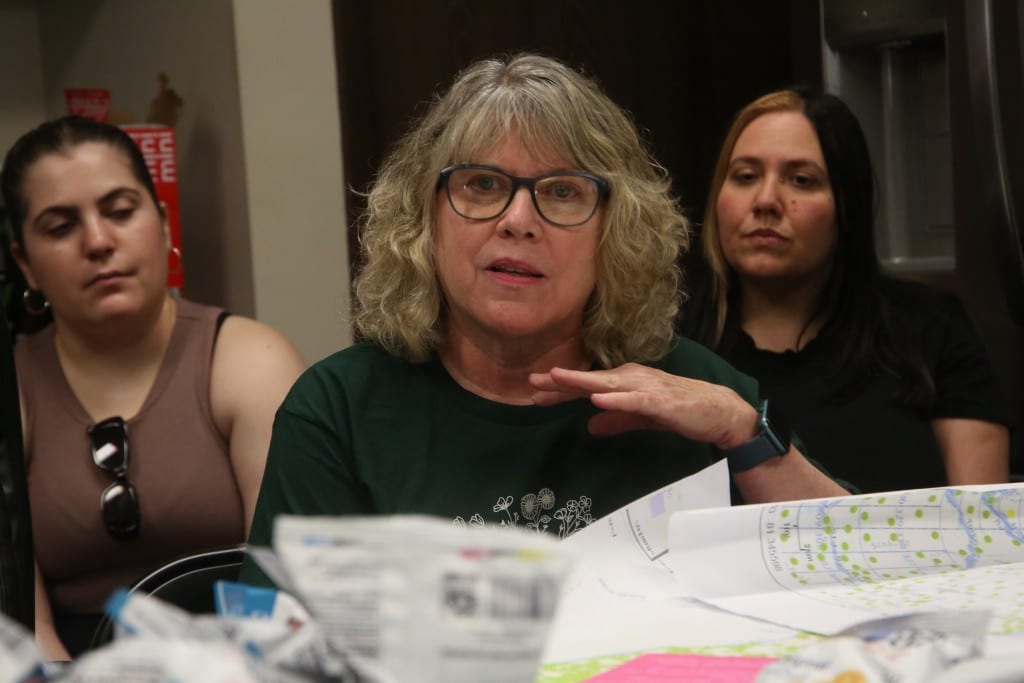
At the Buckeye Environmental Network webinar and at the May 19 Marietta meeting, Pokladnik voiced concerns about the safety of transporting and storing carbon underground, the high energy and water input required for the process, unknowns regarding long-term efficacy of carbon sequestration, and high cost of the process that Pokladnik said would likely be passed along to taxpayers.
Poklandnik also said the technology as implemented so far in the U.S. is counterproductive in combatting climate change because carbon producers are often paid for the carbon captured, thereby incentivizing further production.
“To jump on the bandwagon and talk about this as a solution to climate change is just crazy, because it actually ends up being more of a carbon dioxide producer,” Poklandnik said at the Marietta meeting. “We are incentivizing industries to put out CO2.”
Additionally, Poklandnik said captured carbon is often used to enhance oil and gas extraction, thereby contributing directly to more carbon emissions.
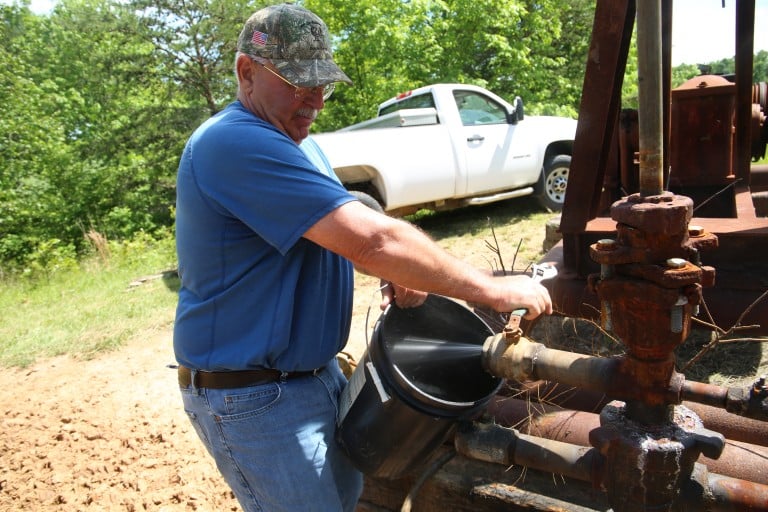
Oil and gas producers who also attended the Marietta meeting shared their negative experiences with Class II wells that are already operating in Ohio, which are used for underground storage of waste produced by fracking.
Bob Wilson, one oil and gas producer who attended the meeting, said he owns 170 oil and gas wells, about 45 of which have been affected by the underground migration of fracking waste, known as brine, from Class II wells.
The state of Ohio has addressed multiple instances of brine migration in southeast Ohio in recent years.
The state suspended multiple wells owned by K&H Partners in Athens County over concern that the wells would contaminate drinking water. In 2023, the state suspended wells owned by Ohio Sen. Brian Chavez’s company, Deeprock Disposal Solutions.
Chavez is one of two primary sponsors for the Ohio Senate carbon sequestration bill. He represents Ohio Senate District 30, which includes Athens and Washington counties, and he chairs the Senate’s energy committee. He assumed his role in the senate following years of advocacy for major oil and gas companies, most recently having represented major petroleum on the Ohio Oil and Gas Commission.
Chavez’s office did not return multiple requests to comment for this story.
Pokladnik said at the Marietta meeting that, much like fracking waste injection, carbon sequestration could pose a risk to drinking water through underground migration. If sequestered carbon migrates to drinking water, it would create carbonic acid, Pokladnik said. That acidic water would strip additional contaminants from bedrock and make water unfit for drinking.
Pokladnik also voiced concern at the Marietta meeting about the infrastructure that would be used to transport highly pressurized carbon dioxide for storage in injection wells.
A 2020 carbon pipeline rupture in Satarita, Mississippi, resulted in a plume of CO2 settling over the town, causing asphyxiation and 45 hospitalizations. Cars also stopped working, creating challenges for the emergency response, according to reporting by NPR.
Bev Reed, with Buckeye Environmental Network, said at the April webinar that risks associated with carbon sequestration are particularly acute in Ohio.
“Ohio’s potential carbon storage reservoirs are also overlaid by tens of thousands of abandoned oil and gas wells, and these old wells provide pathways for injected carbon to escape into communities or leach into groundwater supplies,” Reed said.
In their statement, Ohio House representatives Blasdel and Peterson said that carbon sequestration will come to Ohio regardless of whether their bill is passed, and that placing Ohio in the drivers’ seat of carbon sequestration will improve the outcomes.
“Regulating carbon capture and storage ourselves means that the individuals who are responsible for regulatory compliance will be OHIOANS,” the House legislators said in their written statement. “They will have a vested interest in ensuring that safety regulations are followed, and resources can be on-site rapidly if there is a need.”
However, speakers at the Marietta meeting said that if ODNR cannot prevent migration from its Class II wells, it should not be trusted to manage Class VI wells.
“ODNR has proven time and time again, they can’t babysit and get it right,” Pokladnik said at the Marietta meeting. “So why are we letting them take over one more toxic aspect in this state, and thinking that they’re going to do it right when they failed on so many other avenues?”
ODNR spokesperson Karina Cheung told the Independent in an email, “Should these bills be enacted, ODNR will, as always, ensure that comprehensive rules are developed and adopted to administer the program in a manner protective of the public and the environment.”
The bills build upon a 2022 law that required ODNR to seek regulatory authority over Class VI wells. Establishing a regulatory framework for the state’s oversight is one important part of that process.
“These bills are steps in the process that are needed before ODNR can seek primary enforcement in accordance with the 2022 law,” Chueng said.
Reed told the Independent in an email that she hopes raising awareness about issues with migration from Class II wells in the region could potentially make legislators “hesitant to vote this bill through.”
State Rep. Tristan Rader (D-13) attended the Marietta meeting “to learn more about your experience currently with how [Class II] injection wells have been working out here for the water, wastewater, brine, water, and things like that,” he said. “I think there might be some similarities there to what might happen if carbon wells start becoming a thing here in Ohio.”
Rader added, “I kind of already know the problem, but I want to hear it from the source. … I’m thinking, like, ‘How am I going to build a floor speech? How am I going to convince my colleagues and tell your story?’”
Even if the bills pass, it will not automatically mean that the ODNR will assume primacy over Class VI wells, as federal regulations protecting drinking water supersede state legislation.
U.S. EPA Region 5 Press Officer Danielle Kaufman told the Independent in an email, “EPA approves state programs when it concludes, on review of a submitted program and after public participation, that the program meets requirements of the SDWA [Safe Drinking Water Act] and regulations.”
Both S.B. 136 and H.B. 170 remain in committee and have yet to be heard by the full chambers.

Discover more from MOVCAC.com
Subscribe to get the latest posts sent to your email.
